 The River Thames Guide
Brunel’s railway bridges, the crossing between Goring and Streatley, and the approaches to Reading define this stretch. It is a useful guide for combining bridge history with a town visit or a shorter Thames-side walk.
History and visitor information reviewed .
In this bridge guide
Moulsford and Gatehampton railway bridges
Moulsford and Gatehampton are part of the Great Western Railway’s river-crossing story. Historic England describes Brunel’s original structures, built around 1838–40, and later widening in the 1890s. Their low brick arches are best appreciated from lawful riverside viewpoints; neither railway crossing is a pedestrian route.

Goring and Streatley
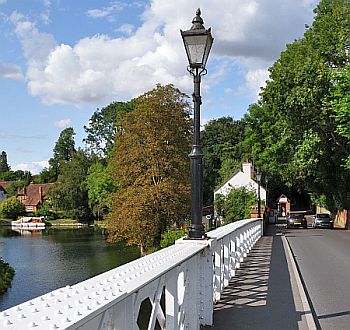
The road crossing links Goring and Streatley across the river and its island. This is a natural place to pause and look along the Thames, or choose a walk from our riverside walks directory. Take care where narrow pavements meet the road approaches.

Pangbourne and Whitchurch
Whitchurch Bridge links Pangbourne with Whitchurch-on-Thames. It is a toll crossing, so motorists should check the current posted arrangements. The village’s bridge history records the opening of the reconstructed bridge in September 2014. Explore the surroundings with our Pangbourne guide.

Caversham, Reading and the Kennet
Caversham Bridge and Reading Bridge are the main road crossings featured in this guide as the river reaches Reading. Downstream, the River Kennet connects with the Thames and the Kennet & Avon waterway. Use our Reading guide for nearby places to visit and our canals directory to explore the wider network.

