 The River Thames Guide
PLAN YOUR VISIT
Visiting Buscot Lock and Weir
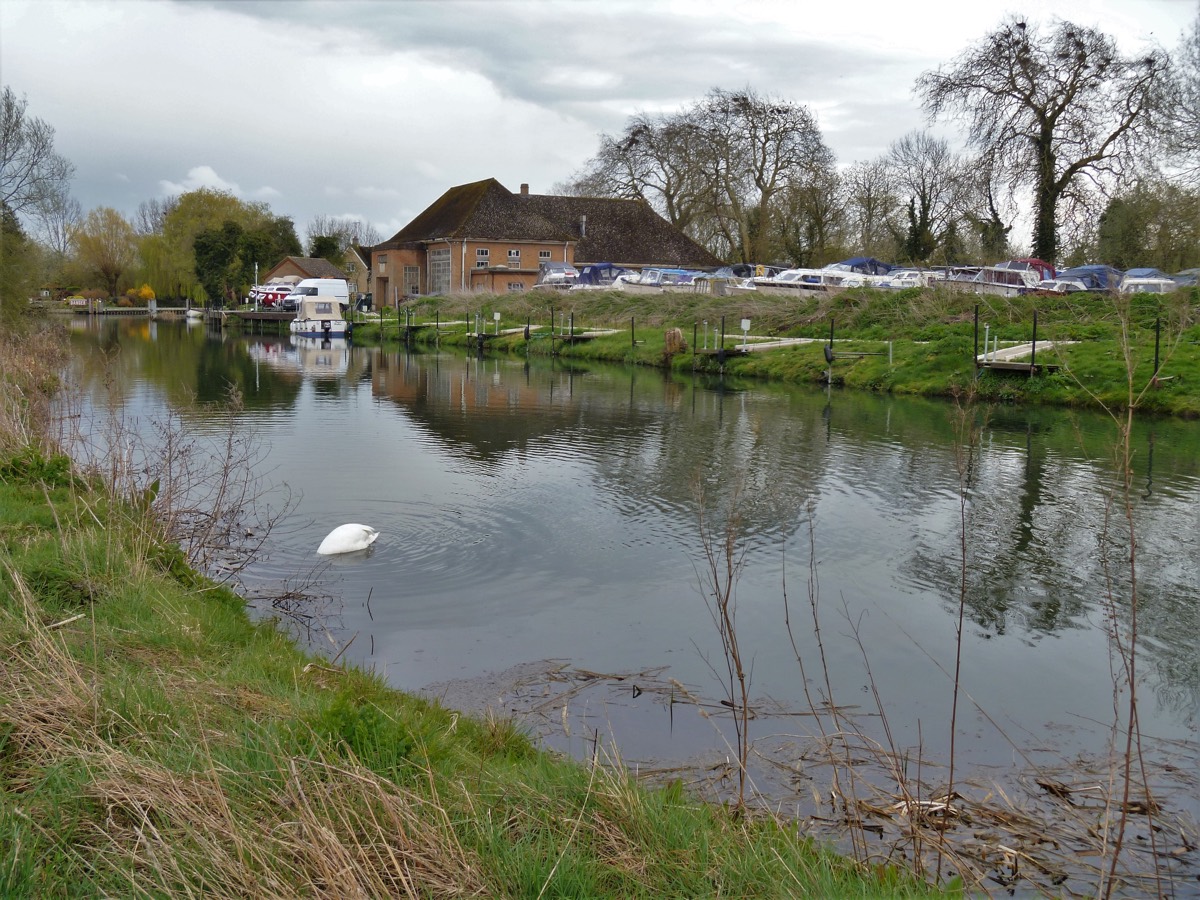
Buscot Lock sits on the upper River Thames near Lechlade. A walk from the village takes you towards the weir pool and the lock, with the Thames Path opening up routes along both neighbouring reaches.
Parking, refreshments and access
The National Trust’s Buscot Village guide gives SN7 8DA for satnav and lists a village car park, tea-room and toilets near the tea-room. Check its current parking charges and opening arrangements before visiting.
For routes crossing the lock, the National Trust notes a step up and a narrow walkway. Riverside paths and footbridges may limit access, so check the route against your mobility needs. Village toilets are separate from the lock facilities listed below.
Walks from Buscot
The Buscot Red Walk (PDF) is a 3-mile circular route passing the lock, wartime bunkers and traces of an industrial farming estate. For a longer outing, the National Trust Thames Walk links Buscot with the countryside around Kelmscott.
THE STORY OF THE RIVER
The history of Buscot Lock
Buscot has long laid claim to being the smallest of the 45 locks on the non-tidal River Thames. Its published chamber dimensions are just 33.47 metres long and 4.47 metres wide.
The lock was built in 1790. Its traditional gates are operated using heavy wooden balance beams, a characteristic feature recorded in our original guide. Before the lock, a flash weir controlled the river here. The later weir, described in the guide as an unusual cresting weir, spills into the pool beside the National Trust riverside area.
Robert Campbell and the Buscot estate
Robert Tertius Campbell acquired the estate in 1859, seeking to create an exceptionally industrialised farm. Our earlier account links his wealth to the Australian gold fields and describes river-powered water wheels irrigating the estate, a distillery and a beet business.
The National Trust’s walking guide identifies nearby Brandy Island as the site of Campbell’s short-lived spirits factory. The river was part of a much larger experiment in agricultural and industrial technology.
Historic England records the estate’s sale to Alexander Henderson in 1889, followed by its purchase by Ernest Cook in 1948 and bequest to the National Trust in 1956. This corrects the earlier guide’s attribution of the purchase and gift to Thomas Cook, the travel agents. Read the documented estate history.
A shared builder
Thacker identifies J. Nock as the builder of both Buscot and St John’s. Buscot’s stone chamber opened at the end of 1790, linking the two neighbouring locks’ origins.
Research source: F. S. Thacker, The Thames Highway: Buscot. Checked 6 October 2026.
BESIDE THE LOCK
Lock Cottage and the fish stews
Lock Cottage dates from the late 1700s and was originally the lock keeper’s home. Historic England lists the stone-built cottage at Grade II and records its later use as a National Trust holiday cottage; it should not be described as the present keeper’s home.
Our original account tells how the building also served as a fish house. Beneath its floor were “fish stews”: deep ponds supplied with river water, holding fish for sale. The keeper therefore also guarded fish stocks belonging to Edward Loveden of Buscot House.
The fish-house story is retained from our local history account; the statutory listing describes the cottage’s construction and later alterations. View the Lock Cottage listing.
PAUSE BY THE WATER
Wildlife around Buscot Lock
These wildlife details come from our earlier local account, not a current survey or a guarantee of sightings.
The lock and weir pool provide a setting for watching river wildlife. Otters have been reported here but can be difficult to spot. Our guide also records red kites, hobbies, buzzards and kingfishers.
Take time to watch quietly from the paths. Sightings vary with the season and time of day; keep dogs under control, particularly around livestock.
ON THE WATER
Boating through Buscot Lock
St John’s Lock is 1.85 km (1.15 miles) upstream. The next lock downstream is Grafton Lock, 5.37 km (3.34 miles) away by river.
Published lock dimensions
- Length
- 33.47 m
- Width
- 4.47 m
- Fall
- 1.69 m
- Upper sill depth
- 1.47 m
- Lower sill depth
- 1.47 m
Source: Environment Agency distances and measurements. Published dimensions and sill depths do not guarantee navigable clearance. Check water levels, the full guidance and current restrictions.
Consult the lock keeper service and follow the instructions displayed at the lock.
Neighbouring reaches: cruising estimates
| Reach | km / miles | EA estimate |
|---|---|---|
| St John’s → Buscot | 1.85 / 1.15 | 15 minutes |
| Buscot → Grafton | 5.37 / 3.34 | 41 minutes |
The Environment Agency estimates assume 8 km/h. Add waiting and lock-passage time; conditions can lengthen journeys. These are river distances, not walking distances.
Facilities and visitor mooring
The Environment Agency currently lists the lock toilet and shower as closed. It lists visitor mooring upstream on Buscot Lock island. Check signs on site for mooring terms and availability.
Checked 6 October 2026 against the Environment Agency facilities guide. Village facilities and lock facilities are separate.
Dry-weather passage restrictions
Checked 6 October 2026: the EA still lists restrictions from St John’s to Osney, covering this lock. Passages during keeper hours are limited to one movement each way per half-hour. Overnight closures run from 30 minutes before duty ends until 30 minutes after duty starts the next day. Check current hours and the full notice when planning your arrival.
EA dry-weather navigation notice; arrangements remain subject to review.
BEFORE YOU SET OFF
River conditions at Buscot Lock
Check stream warnings and navigation closures separately. A lack of stream warnings does not confirm that a lock is open.
For the latest information, check the official river conditions service below.
Questions about Buscot Lock
Where can I park for Buscot Lock?
Use the National Trust car park in Buscot village, then follow the route towards the weir and lock. Check current charges and signs when you arrive.
Are there toilets at Buscot Lock?
The Environment Agency lists the lock toilet as closed. The National Trust separately lists village toilets near the tea-room; check their availability before relying on them.
Which locks are next to Buscot?
St John’s is upstream and Grafton is downstream. Their river distances from Buscot are 1.85 km and 5.37 km respectively.
About this guide
Published by The River Thames Guide. Updated 6 October 2026 using the Environment Agency, National Trust and Historic England sources linked above. The original lock, estate, fish-house and wildlife stories have been retained, with historical corrections identified.
Contains public sector information licensed under the Open Government Licence v3.0. New research is written in original wording; no third-party archive images or maps have been copied. Existing photograph credits and licences are retained.


