 The River Thames Guide
EXPLORE THE THAMES
Visiting Sonning Lock and the Thames Path
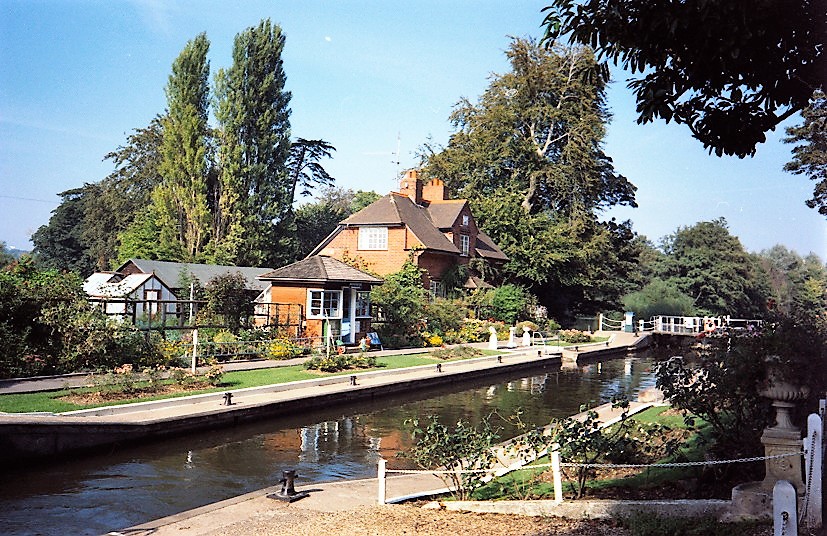
Sonning Lock is beside Sonning, with Sonning Eye across the river. Its postcode is RG4 6UR. Plan village parking and the walking approach separately from the lock’s location.
For riverside walks towards Reading or Shiplake, use the official Thames Path map. Check crossings and diversions when planning the return journey.
Nearby The Mill at Sonning offers a different way to spend time by the river. Check the theatre’s programme and booking information for current plays, musicals and dining arrangements.
Stopping by boat
The Environment Agency identifies visitor mooring along 225 metres upstream of Sonning Lock, with a warning that water depth varies. Check the mooring terms and depth for your boat; a published mooring location is not a guarantee of a space or sufficient clearance.
EA visitor-mooring guidance, checked 4 October 2026.
EXPLORE THE THAMES
From Sonning Mill to dinner theatre
The Domesday Survey of 1086 records three mills at Sonning. For centuries the river carried goods to and from its mills, including wheat from London brought by barge.
The original guide links the end of that barge trade with 1950. The Mills Archive’s historical account (PDF) places the mill’s final closure in 1969, when it was among the last Thames flour mills driven by water wheels.
Restoration gave the site a new purpose as The Mill at Sonning. In 1984, its conversion into a dinner theatre received a conservation award from The Times and the Royal Institution of Chartered Surveyors.
EXPLORE THE THAMES
Sonning Lock and its gates
A flash lock probably served the mill and navigation before the first pound lock was built in 1773.
The original guide records the replacement of wooden gates with steel gates in winter 2004–05, together with a Defra grant for new automated gates. Defra is the Department for Environment, Food and Rural Affairs; these are past improvements, rather than a new works announcement.
Toll receipts on the working Thames
Thacker names Thomas Hall as Sonning’s first keeper and records the lock opening in 1773. Bargemen received certificates of the tonnage on which they had paid, to show at the next lock: a paper trail accompanying the river journey.
Research source: F. S. Thacker, The Thames Highway: Sonning. Checked 4 October 2026.
EXPLORE THE THAMES
James Sadler’s poem about Sonning
James Sadler was a beekeeper, poet and Sonning lock keeper. He was appointed in 1845, according to the historical account in F. S. Thacker’s The Thames Highway. The dates 1845–1885 printed in our original guide should not be read as his birth and death dates.
Is there a spot more lovely than the rest,
By art improved, by nature truly blest?
A noble river at its base running,
It is a little village known as Sonning— James Sadler
This verse remains part of the lock’s local story. For the historical account, see Thacker’s chapter on Thames locks and weirs.
EXPLORE THE THAMES
Wildlife at Sonning Lock
These wildlife details come from our earlier local account, not a current survey or a guarantee of sightings.
The local account records kingfishers, owls, woodpeckers and wagtails, with a visiting cuckoo. It also mentions deer and mink along the banks.
Large pike and terrapins appear in the river records. The original suggestion of otters was tentative and is retained as a possibility, rather than a confirmed current sighting.
ON THE WATER
Boating through Sonning Lock
Caversham Lock is 4.23 km (2.63 miles) upstream. The next lock downstream is Shiplake Lock, 4.68 km (2.91 miles) away by river.
Published lock dimensions
- Length
- 47.57 m
- Width
- 5.46 m
- Fall
- 1.63 m
- Upper sill depth
- 2.00 m
- Lower sill depth
- 1.93 m
Source: Environment Agency distances and measurements. Published dimensions and sill depths do not guarantee navigable clearance. Check water levels, the full guidance and current restrictions.
Consult the lock keeper service and follow the instructions displayed at the lock.
Neighbouring reaches: cruising estimates
| Reach | km / miles | EA estimate |
|---|---|---|
| Caversham → Sonning | 4.23 / 2.63 | 32 minutes |
| Sonning → Shiplake | 4.68 / 2.91 | 36 minutes |
The Environment Agency estimates assume 8 km/h. Add waiting and lock-passage time; conditions can lengthen journeys. These are river distances, not walking distances.
Facilities at Sonning Lock
- card and contactless payments
- toilet
Checked 4 October 2026 against the Environment Agency facilities guide. Availability can change; check the official guide and signs on site.
BEFORE YOU SET OFF
River conditions at Sonning Lock
Check stream warnings and navigation closures separately. A lack of stream warnings does not confirm that a lock is open.
For the latest information, check the official river conditions service below.
Questions about Sonning Lock
Where is Sonning Lock?
It is beside Sonning in Berkshire, between Caversham and Shiplake locks. Its postcode is RG4 6UR.
What is The Mill at Sonning?
It is a dinner theatre in the restored former mill. Check its own programme and booking information for performances and dining.
Who wrote the poem about Sonning Lock?
The verse about the village of Sonning is attributed to James Sadler, the nineteenth-century lock keeper, poet and beekeeper.
About this guide
Published by The River Thames Guide. Research additions, measurements and facilities checked 4 October 2026. Sources are linked beside new material; earlier local accounts are retained where identified. Check changing access and navigation arrangements before travelling.
Contains public sector information licensed under the Open Government Licence v3.0. New research is written in original wording; no third-party archive images or maps have been copied. Existing photograph credits and licences are retained.


